Debt relief and debt settlement remain high-volume consumer lead categories in the United States — and among the most compliance-sensitive. Agencies that last do not win by buying the noisiest lists. They win with exclusive inventory, documented consent, filters that match offer eligibility, and dialer capacity aligned to daily volume.
This guide is for buyers evaluating exclusive web leads, live transfers, and aged inventory for debt programs. Product: Debt Relief leads. Compliance deep dive: TCPA consent records. Economics: exclusive vs shared ROI.
High intent does not reduce the need for clean consent. Debt outreach often means high call volume to financially stressed households — a combination that attracts complaints when capture is thin.

What good debt lead inventory looks like
- Consumer asked for debt help, settlement, or related relief — not a vague “money tips” quiz
- Exclusive to your agency for the agreed window
- Filters such as estimated debt amount, state, and sometimes credit situation
- Real-time CRM delivery or live transfer
- Consent record included with the lead
Eligibility filters save agent minutes. A prospect below your minimum debt threshold is not a “cheap lead” — it is paid waste. Push vendors to support the filters your offers actually require, even if that raises CPL. Cost per sale is the scoreboard.
Why this vertical punishes weak compliance
Debt programs face layered scrutiny: TCPA for calling/texting, marketing rules around claims, and state licensing constraints on who can offer what. “The vendor said it was compliant” is not a strategy. You need language, time, source, channel, and opt-out handling — the checklist in our TCPA guide.
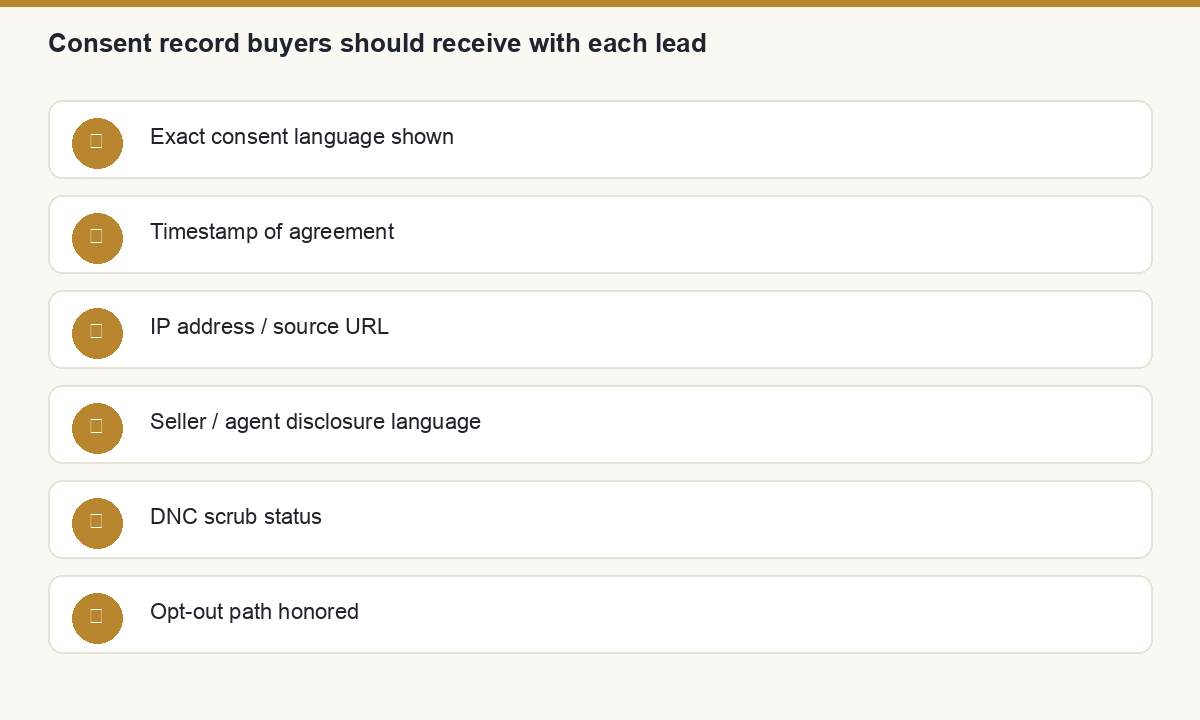
Complaint prevention is a buying discipline. Keep a weekly invalid-number and complaint review. Rising complaints are a buying signal as much as a coaching signal. Throttle or cut sources when friction rises instead of “making up volume” with softer inventory.
Formats: exclusive web, live transfer, aged
Exclusive web leads give scale and CRM control. You own cadence, multi-touch sequences, and offer testing. They demand dialer discipline: same-day first attempts, consistent dispositions, and honest recycled-lead rules inside your own system.
Live transfers compress the funnel when licensed agents or trained closers can take conversations immediately. Transfer programs fail when hold times are long or when warm-up scripts overpromise what your offer can deliver. Define “qualified transfer” in writing: debt amount band, hardship context, state, and consent confirmation.
Aged data can fill capacity between exclusive spikes if it is labeled and priced as aged. Compare formats with cost-per-sale math, not vanity CPL. Aged that was shared five times before it reached you is not a bargain — it is a complaint engine.
Designing a debt pilot that teaches you something
A pilot program should be narrow enough to learn and large enough to be statistically useful. Suggested design:
- One product focus (e.g., settlement vs other debt help — do not mix scripts randomly)
- Few states where you are licensed and staffed
- Debt amount filters aligned to your offers
- Daily cap your dialer can work the same day
- Exclusive inventory only in the pilot window
- Written metrics: contact rate, qualified rate, enroll rate, complaint rate
Use pilot data to set state mix. National averages hide unworkable pockets — states where your close rate collapses or compliance friction spikes. Do not change script, offer, and vendor in the same week; you will not know what worked.
Eligibility filters that save agent minutes
Map your disqualify rules before media starts. Common filters include minimum unsecured debt, excluded debt types, and states you cannot serve. Share those rules with the vendor in writing. Every lead that violates a published filter should be replaceable.
Also filter for intent quality. Consumers who requested a free credit score tool may not have asked for debt settlement. Soft intent can be tested later at lower volume; it should not be the core of an exclusive pilot meant to prove production economics.
Live transfer staffing realities
If you buy transfers, staff for peaks, not averages. Publish agent availability windows to the vendor. Missed transfers are expensive for both sides and poison the relationship. Track transfer-to-talk ratio and talk-to-enroll ratio separately so you can see whether the problem is media or floor performance.
Train agents on empathetic openings. Debt consumers are often embarrassed or stressed. Aggressive closers can spike short-term enrollments and long-term complaints. Exclusive inventory deserves professional conversations.
Complaint prevention as a buying discipline
Build a weekly compliance huddle: opt-outs processed, complaint themes, source-level friction, and script deviations. Feed findings back into vendor management. Multi-source debt floors need one suppression list; otherwise vendor A re-contacts a consumer who opted out via vendor B’s lead last week.
Document agent behavior expectations. Consent allows contact within scope; it does not allow harassment. Call frequency caps and quiet hours are operational controls that protect the brand and the inventory channel.
Vendor management for multi-source debt floors
Many debt agencies buy from more than one vendor. That is rational for capacity — and dangerous for suppression and messaging consistency. Centralize:
- Household-level suppression across all sources
- Consent packet storage in CRM by lead ID
- Source tags that survive reassignment between agents
- Weekly scorecards per vendor, not only blended averages
Prefer fewer sources with cleaner reporting over many sources with conflicting definitions of “exclusive,” “qualified,” and “billable.” Complexity is not sophistication.
Offer integrity and lead quality travel together
Debt lead quality cannot rescue an offer consumers do not understand. If your enrollment process surprises people with fees or timelines that were not framed on the first call, complaint rates rise and “lead quality” becomes the scapegoat. Align marketing claims, transfer warm-up language, and closer scripts before you scale exclusive volume.
Run a monthly audit of recorded calls against consent language and public-facing claims. The audit is not theater; it is how you keep exclusive channels open when scrutiny increases. Buyers who treat compliance as a quarterly PDF exercise usually meet their problems in a concentrated week of complaints.
When you expand to a new state, restart a mini-pilot. Licensing, consumer expectations, and publisher mixes differ. National assumptions break local programs.
Dialer strategy that matches exclusive debt inventory
Exclusive debt leads still need a thoughtful attempt cadence. Bombarding a financially stressed consumer with aggressive multi-dial patterns can raise short-term connects and long-term complaints. Design attempt rules: reasonable retries, quiet hours, and clear stop conditions after “not interested” or opt-out.
Prioritize same-day first attempts. Intent decays. A consumer who requested help this morning is a different conversation at day four. If your dialer is already saturated, lower the exclusive daily cap before you lower quality standards. Paying for exclusive inventory you cannot touch is reverse alchemy.
Separate recycled exclusive leads inside your CRM from fresh deliveries. Agents should know whether they are calling a brand-new exclusive or a second-week follow-up. Talk tracks differ. So do expectations.
Compliance training that sticks on a debt floor
Annual PDF acknowledgments are not training. Use short weekly scenarios: how to open a call within consent scope, how to handle “who sold you my number,” how to process opt-outs in under a minute, how to avoid prohibited claims about results. Test agents. Coach failures. Document the program.
Make consent packets visible on the agent screen. When a consumer challenges the contact, the agent should not invent a story. They should follow a scripted path and escalate to a compliance owner with the packet already attached to the record.
Coordinate marketing claims with legal and operations. If ads imply outcomes your process cannot support, lead quality will be blamed for a message problem. Exclusive channels amplify both good and bad positioning.
Multi-state licensing and the true cost of “national” leads
National exclusive volume is only useful where you can legally and operationally serve the consumer. Build a hard allow-list of states. Reject or auto-replace the rest. Vendors that cannot honor allow-lists will waste your replacement process and your patience.
When you enter a new state, run a fresh pilot: local script nuances, different creditor mix, different consumer expectations. Closing rates can differ more by state than by vendor. Your model should allow that variance instead of forcing a single national close-rate assumption.
Finance metrics debt buyers actually need
Beyond CPL, track cost per qualified conversation, cost per enrollment, refund/cancel rates where relevant, and complaint rate per thousand contacts. A source with excellent CPL and elevated complaint rate is not a bargain; it is a delayed cost center.
Bring finance into pilot design. Agree on thresholds before day one. When the pilot ends, decide with numbers. Endless “soft launches” are how mediocre sources live forever in the stack.
Re-underwrite quarterly. Debt media ecosystems change quickly. Publisher quality drifts. Your suppression list grows. What worked in Q1 may be average in Q3.
Creative and landing alignment with exclusive delivery
If you influence creative, keep promises narrow and accurate. “Debt relief options” is different from guaranteeing enrollment outcomes. Misaligned creative produces angry first calls even when the phone number is exclusive and the consent packet is perfect. Review landing pages the way you review scripts: monthly, with compliance present.
When buying from open networks, ask for top publisher examples and reject categories you do not want (incentive traffic, misleading quizzes). Exclusive does not cleanse a deceptive capture path.
Segmenting debt intent without drowning in SKUs
Not all debt-interested consumers are settlement candidates. Some need credit counseling paths, some need consolidation education, some are simply shopping rates. If your enrollment product is narrow, either filter aggressively or build a referral path for non-fit consumers that still respects consent scope. Dumping every non-fit into endless redials is how complaint rates climb.
Start with two segments maximum in a pilot: core-fit exclusive and maybe a secondary educational segment at lower volume. Master core-fit economics before you invent five SKUs that your floor cannot operationalize.
Tag outcomes carefully: enrolled, not qualified (reason), not interested, compliance opt-out, wrong number. Reasons for non-qualification feed filter negotiations with vendors. Vague “bad lead” tags teach no one.
Inbound reputation and outbound lead buying
Debt brands live and die by trust. Outbound exclusive leads should not sound like spam even when legally consented. Openings that reference the consumer’s request, avoid shouting, and offer an easy opt-out path protect long-term paid and organic channels alike.
Monitor public reviews and social complaints that mention unsolicited contact. Patterns often point to a specific publisher or a specific agent team. Fix the root; do not only issue refunds on individual leads.
Contract terms that protect both sides
Good debt lead contracts clarify exclusivity windows, billable definitions for transfers, replacement timelines, data use limits, and audit rights for consent samples. Vague contracts produce vague arguments at month end. Spend the legal hours once.
Include a pause clause for compliance incidents. Both parties should want a fast freeze mechanism. Volume commitments that ignore sudden friction are how relationships end in accusations instead of scorecards.
Price escalators tied only to volume without quality floors are incomplete. If you commit to higher monthly volume, pair it with quality KPIs: wrong-number caps, consent packet completeness, and complaint thresholds.
Practical FAQs for debt lead buyers
Is exclusive enough to keep us safe? No. Exclusive is an economic and experience advantage. Consent documentation and agent behavior complete the picture.
Should we buy transfers or web leads first? Choose based on staffing. Transfers need live capacity. Web leads need dialer discipline. Piloting both at full volume on week one is how teams learn nothing.
How long should a pilot run? Long enough for a few cohorts to reach enrollment outcomes — often several weeks, not three days. Short pilots measure contact vibes, not cost per enrollment.
What is a red flag on a sales call with a vendor? Refusal to show sample consent packets, refusal to define exclusivity in writing, and pressure to skip a paid pilot “because volume is limited today.”
Where Braqon fits
Braqon supplies exclusive debt relief leads with consent documentation and real-time delivery options. Buyers begin with a pilot program sized to dialer capacity and state licensing, then scale. Start at Debt Relief leads, review the US FAQ, or visit the US hub.
Bring minimum debt thresholds, licensed states, and daily connect capacity. That is enough to scope a pilot that measures enroll economics — not just dial volume.