If you sell final expense or burial life insurance, you already know the lead market is loud. Vendors promise hot seniors, guaranteed appointments, and “set-and-forget” pipelines. The agencies that actually scale are quieter about slogans and stricter about inventory: they buy exclusive final expense leads with a consent record they can produce, delivered quickly enough to call while the prospect still remembers submitting a form.
This guide is a buying manual for agents, agencies, IMOs, and call centers. It covers exclusive web leads, live transfers, aged data, market pricing context, TCPA reality, and how to run a pilot program before monthly volume. For product details, use the Final Expense leads page. For cross-reading, see TCPA consent records, exclusive vs shared ROI, and Medicare leads if your team writes both senior products.
Final expense prospects are seniors. Weak consent becomes expensive quickly — financially and reputationally. Treat documentation as part of the product, not an afterthought.

What “exclusive” should mean in final expense
Exclusive means the lead is sold to one buyer. You are not competing with four other agencies that purchased the same record from a shared pool. If a vendor’s “exclusive” still allows silent multi-sale inside a network, it is exclusive in name only.
A usable exclusive FE lead also has intent. The consumer requested burial, final expense, or affordable life coverage — not a vague quiz about “planning ahead.” Intent is the difference between a lead and a demographic row. Age, state, and basic health filters matter, but intent is what protects agent minutes.
Exclusive without documentation is still a liability. If you cannot show the language shown to the consumer, the timestamp, the source URL or campaign, and that agents or sellers were disclosed, you bought a phone number — not a defensible contact. That standard sits at the center of how Braqon builds Final Expense delivery.
- One buyer for the agreed exclusive window
- Clear product intent (burial / final expense / affordable life)
- State and age filters that match your appointments
- Consent packet deliverable with the lead file
- Real-time CRM, email, or webhook delivery
Lead formats serious FE teams actually buy
Exclusive web leads
Form-based exclusive web leads remain the core SKU for most agencies. The prospect completes a landing page or publisher form; the lead routes to you alone. You control dial strategy, scripts, and follow-up cadence. Quality varies by traffic source: search and high-intent native tend to convert differently from broad social quizzes. Ask for sample sources and reject black-box “networks” that cannot describe capture.
Speed is part of exclusivity. An exclusive lead dialed two hours late behaves like a shared lead that already cooled. Measure median minutes from delivery to first connect attempt, not only CPL.
Live transfers
Live transfers put a warmed prospect on the phone with your licensed agent. Unit price is higher; friction is lower when your floor can take calls immediately. Live transfers fail when staffing is thin: missed transfers become wasted premium inventory. Staff the phone before you scale transfer volume.
For FE, transfers work especially well when the consumer already confirmed interest in burial coverage and basic eligibility questions were asked on the warm-up call. Demand a written definition of “warmed” so you are not buying cold connects dressed as transfers.
Aged final expense data
Aged data is inventory that was generated earlier and did not convert for the original buyer — or was never exclusive in the first place. It can fill dialer capacity at a lower unit cost. It is not a substitute for exclusive fresh leads if your goal is predictable weekly production.
If you buy aged, require clear age of data (days/weeks), original intent category, and prior contact attempts when available. Price it as aged. Do not let a vendor rebrand recycled shared lists as “exclusive aged.”
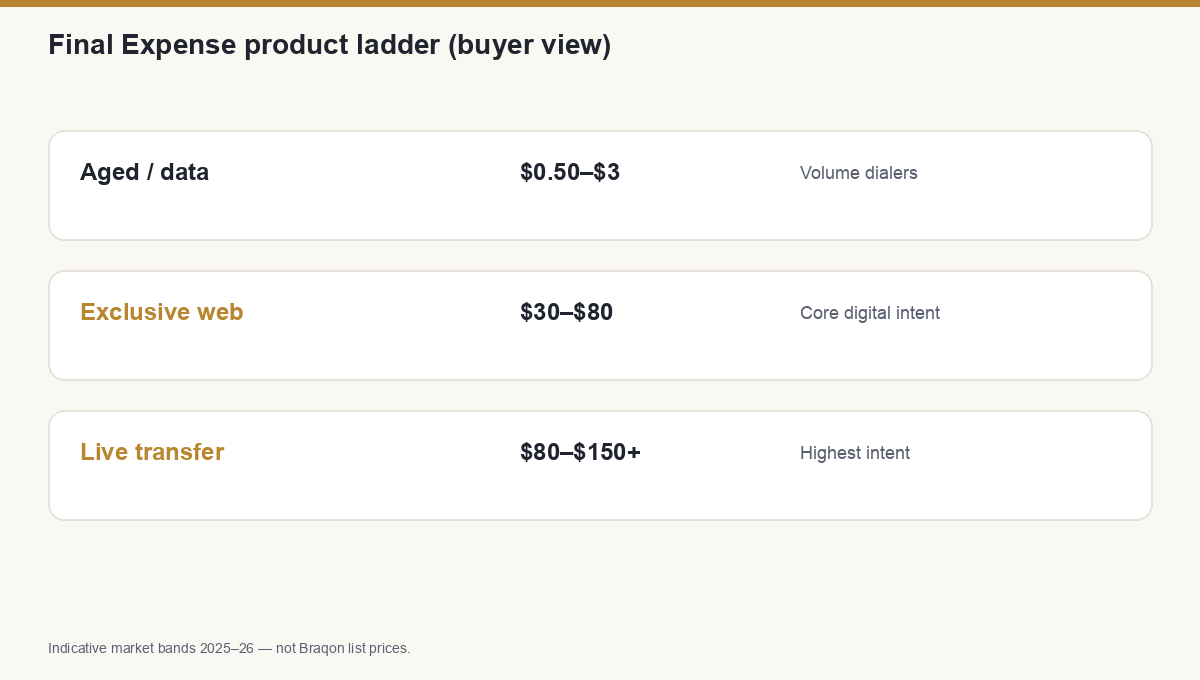
Market pricing context (indicative, not a quote)
Public “price lists” for final expense leads are noisy because geography, exclusivity, age bands, and traffic quality move unit cost. Treat published ranges as directional education, never as a Braqon quote. What matters is cost per sale on your dialer after labor.
| Format | What you are buying | How to judge price |
|---|---|---|
| Exclusive web | One-buyer digital intent | Cost per issued policy / cost per app |
| Live transfer | Warmed phone conversation | Cost per transfer that reaches licensed agent + close rate |
| Aged | Older intent, lower CPL | Contact rate and cost per appointment, not vanity volume |
Market price bands are indicative only, not Braqon quotes. Pilot on your states and scripts before modeling annual volume.
A $45 exclusive that books solid appointments can beat a $18 shared lead that five agencies already called. Run the math with your close rate — see exclusive vs shared ROI.
TCPA is not optional in final expense
Final expense outreach often involves outbound calling to seniors. That combination attracts attention when consent is thin. “The vendor said it was TCPA compliant” is not a legal strategy. You need the packet: language, time, source, channel scope, and opt-out handling. Deep dive: TCPA consent records for lead buyers.
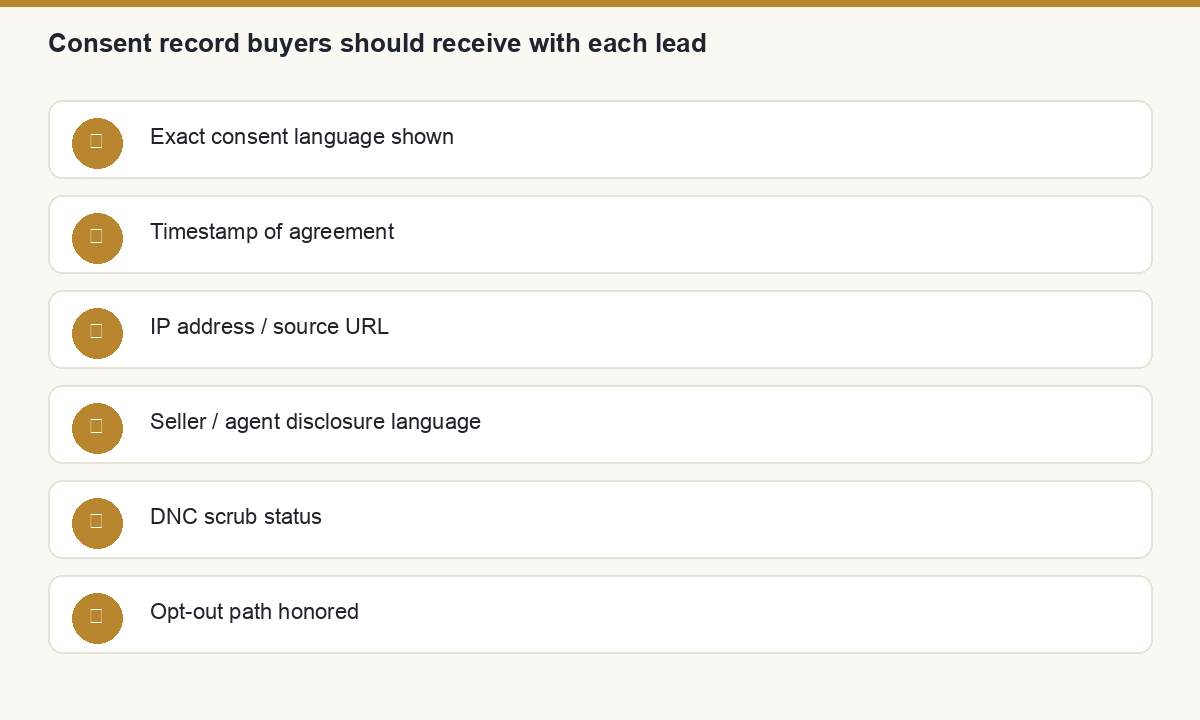
Practically, ask for a sample consent packet on ten real leads before you commit monthly volume. If the vendor stalls, you learned something important without spending a quarter of media budget. Align your scripts with the consent language: if the form promised final expense information, do not open with an unrelated product pitch.
Also maintain your own suppression list. Multi-vendor FE buyers who fail to suppress recreate shared-lead dynamics and multiply complaint risk — even when each vendor claims exclusivity inside their own feed.
Stop arguing CPL. Argue cost per sale
Cost per sale ≈ CPL ÷ close rate, then add agent labor, no-contact waste, and fulfillment cost. Shared inventory often wins the CPL slide and loses the P&L. Exclusive inventory often loses the CPL slide and wins the month when contact rates and close rates improve.
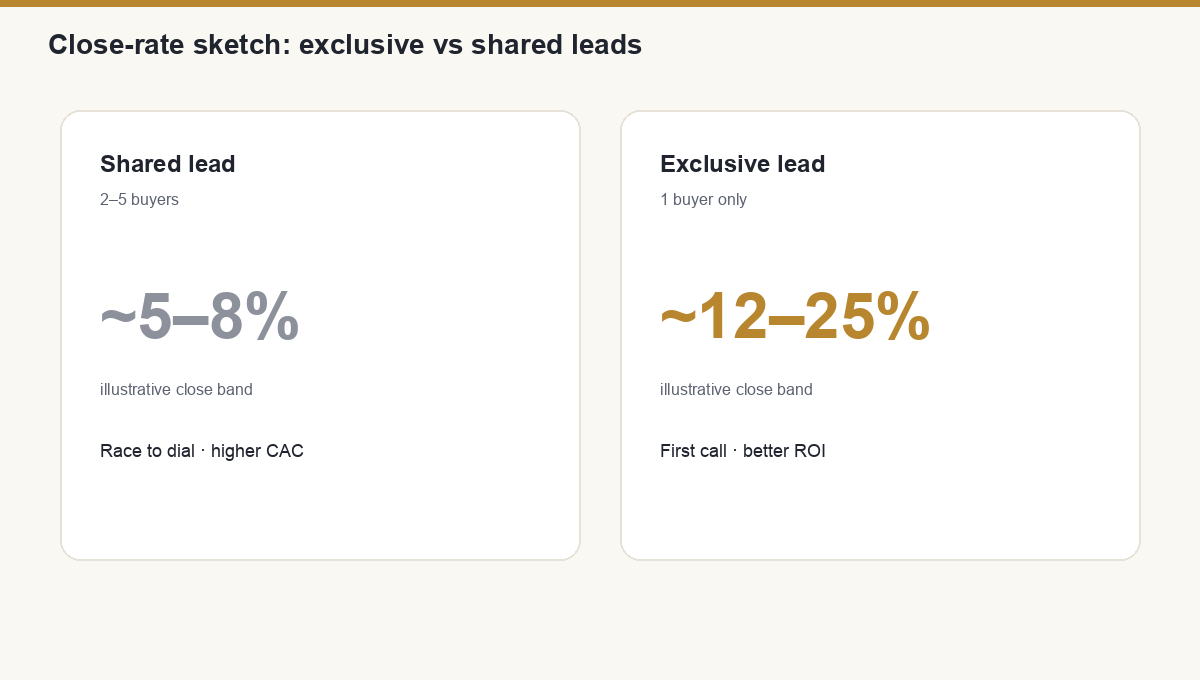
Build a simple pilot scorecard: leads delivered, contact rate within 24 hours, appointments set, apps written, policies issued, complaints/opt-outs. If a vendor cannot support those metrics in reporting, they are selling leads, not outcomes you can manage.
How to evaluate any FE vendor
Before you scale, pressure-test the commercial relationship:
- Exclusivity definition in writing — one buyer, window length, geo rules
- Consent sample packet — ten real leads, not a marketing PDF
- Source transparency — publisher types, not “proprietary mix” forever
- Delivery SLA — real-time routing and retry behavior
- Replacement policy — invalid numbers, wrong age, non-intent
- Pilot design — fixed states, daily caps, success criteria
Agencies and IMOs should add downline distribution rules: who gets which leads, how speed is enforced, and how compliance training is documented. Exclusive inventory wasted on an untrained agent is still exclusive — and still wasted.
Designing a final expense pilot that teaches you something
A pilot program is a commercial package with agreed volume, states, format, and pricing. It is not complimentary inventory. The point is learning: contact rates, close rates, and operational fit before monthly commitment.
- One primary format (exclusive web or transfers first — not both at chaos volume)
- Few states where you are appointed and staffed
- Daily cap your dialer can work the same day
- Script frozen for the pilot window so you measure inventory, not script churn
- Written go / no-go criteria before day one
Week one should establish baselines, not heroics. Cap volume so every exclusive lead gets a real attempt. If you cannot work today’s inventory today, you are not ready for more media — you are ready for process work.
Week two and three refine state mix and time-of-day dialing. Only then discuss scaling. Buyers who skip this sequence often conclude “exclusive doesn’t work” when the real failure was operational understaffing.
A week-one operating rhythm for FE teams
Map ownership clearly: who owns CRM ingestion, who owns first dial, who owns compliance exceptions. Exclusive leads punish unclear ownership because nobody else is racing you — the only race is against cooling intent.
Recommended rhythm for a small floor:
- Morning: confirm overnight deliveries, scrub internal DNC, assign first-touch owners
- Midday: second attempts on no-answers; log disposition codes consistently
- Afternoon: manager review of contact rate and invalids; flag vendor issues same day
- End of day: suppress exhausted contacts; export opt-outs to master list
Disposition discipline matters. If agents mark everything “not interested,” you cannot tell bad inventory from bad pitch. Separate wrong number, no answer, callback, not interested, and app started.
Questions to ask before you sign a monthly FE agreement
Use these in vendor calls. Soft answers are data:
- How many other buyers can receive the same consumer record in any form?
- What exact consent language appears on the capture path for my geo?
- Can I audit publisher paths, or only aggregated “sources”?
- What is median delivery latency from form submit to my CRM?
- How are replacements credited, and how long does that take?
- What happens when I need to pause a state for appointment or staffing reasons?
If pricing only makes sense at huge volume with no pilot, treat that as a risk signal. Serious exclusive sellers can usually structure a paid pilot that protects both sides.
Script and process notes that protect exclusive value
Exclusive inventory raises contact odds; it does not write the policy for you. Opening lines should match the consumer’s request. Reference the form topic. Confirm they still want information on burial or final expense coverage. Ask permission to continue. That sequence respects consent language and improves trust with seniors.
Do not stack three product pitches into the first ninety seconds. FE buyers who also sell Medicare or other senior products should keep offers coordinated with consent scope — more on that in the Medicare AEP guide.
Record calls where lawful and useful for coaching. Review a sample weekly. Exclusive leads often fail in the first thirty seconds of agent behavior, not in the media channel.
How FE and Medicare buying should stay coordinated
Many agencies write both final expense and Medicare products. That creates opportunity and risk. Opportunity: household-level relationship. Risk: consent and suppression chaos when two vendors feed the same phone numbers for different offers.
Operationally, maintain one household suppression view across both products. If a consumer opts out on FE, do not re-contact them from a Medicare feed without a fresh, offer-appropriate consent path. If your agents cross-sell, make sure the original capture language supports the conversation you are having.
From a media standpoint, do not assume FE exclusive and Medicare exclusive from different vendors never overlap. They can. Your internal hygiene is the last line of defense.
Common FE buying mistakes that burn quarters
Three patterns show up repeatedly in agencies that say “exclusive doesn’t work.” First, they buy exclusive volume their dialer cannot touch the same day, then judge inventory by day-three contact rates. Second, they rotate scripts weekly during the pilot, so they never isolate media quality. Third, they accept vague exclusivity language and discover multi-path resale only after close rates disappoint.
Fix the operating model before you expand states. Exclusive final expense leads reward teams that already behave like operators: clear ownership, fixed scripts for measurement windows, and weekly vendor scorecards. If those pieces are missing, even excellent inventory will look average.
A fourth mistake is ignoring aged vs fresh labeling. Blended invoices hide the fact that half the month was recycled. Demand SKU-level reporting. Pay for what you actually received.
State mix, appointments, and why geography is a product feature
Final expense is sold under state appointments and carrier rules. A national exclusive feed sounds attractive until half the records land where you cannot write. Treat geography as a first-class product feature: buy states where you are appointed, staffed, and proven. Expanding one new state should look like a mini-pilot, not a silent toggle on a vendor portal.
Ask vendors for historical volume by state before you commit. Some publishers concentrate in a handful of geos. If 60% of “national” volume is three states you do not want, the headline CPL is fiction. Prefer a smaller exclusive allocation in the right states over a larger allocation everywhere.
Also align age bands to your carriers. If your sweet spot is 50–75 and the form allows 40–85 without filtering, your agents will spend minutes disqualifying. Filters cost more per lead and less per sale when they match reality.
Carrier mix, underwriting friction, and lead timing
Not every final expense app is equal. Simplified issue vs guaranteed issue paths change talk tracks and close timing. If your agents primarily write one path, tell the vendor. Media that attracts consumers who need a different underwriting story will show up as “bad leads” when the real issue is offer mismatch.
Timing matters too. Exclusive leads delivered after your call center closes need a morning protocol: prioritized first dials, SMS where consented, and clear ownership. Overnight inventory that sits untouched until afternoon behaves like shared inventory that cooled overnight — except you still paid exclusive prices.
Build a simple overnight queue rule. The oldest exclusive unworked lead from last night is the first dial at open, not the newest shiny record. That discipline alone can lift contact rates without changing vendors.
Training new agents on exclusive FE without wasting inventory
New agents learn faster on exclusive inventory because they are not competing with four other callers in the first five minutes. That does not mean you should dump premium leads on untrained reps. Use a graduated path: listening to recorded calls, dual-jacking with a mentor, then limited exclusive volume with manager review of first-week dispositions.
Measure new-agent close rates separately for 30 days. If you blend them into the vendor scorecard, you will fire good media or keep bad media for the wrong reasons. Vendor quality and agent ramp are different variables. Keep them separable in your reporting.
Where Braqon fits
Braqon sells exclusive final expense inventory with documented consent and real-time delivery options for US buyers. We start new relationships with a pilot program — paid, scoped, and designed to show contact and close reality on your floor — then scale monthly volume when the numbers justify it. Explore Final Expense leads, read the US FAQ, or start from the US hub.
If exclusive FE with consent records is what you are shopping for, request a pilot scoped to your states and format mix. Bring your dialer capacity and appointment map — that is how we avoid selling you inventory you cannot work.